
Ever wondered how a sniper scope turns a regular rifle into a precision tool? It’s like unlocking a secret code for long-range shooting.
Rifle scopes are more than just magnifying glasses. They are complex optical systems designed for accuracy in tough shooting conditions. Exploring these tools has shown me the amazing technologies behind them.
Whether you’re a pro marksman or a hunting fan, knowing how a sniper scope works can boost your skills. These tools turn small adjustments into big hits, making the connection between shooter and target stronger.
Key Takeaways
- Sniper scopes are sophisticated optical systems
- Precision engineering enables long-range shooting accuracy
- Understanding scope mechanics improves marksmanship
- Advanced optics transform standard rifles into precision instruments
- Scope technology continues to evolve rapidly
Understanding the Basic Components of Sniper Scopes
Long-range optics are key for precision shooting. Knowing the parts of a sniper scope is vital. Each part is crucial for top accuracy and performance.
A sniper scope is a complex tool for better shooting. Let’s explore the main parts that make these optics stand out.
Main Tube and Objective Lens
The main tube is the scope’s core. Made from strong aluminum, it’s built for durability and stability. The objective lens at the front collects light and forms the first image.
- Diameter ranges from 24mm to 56mm
- Bigger lens lets in more light
- Important for shooting in the dark
Eyepiece and Ocular Lens System
The eyepiece is where the shooter sees the target. It’s designed for comfort and clear vision. This helps shooters stay focused during long shots.
| Component | Function | Importance |
|---|---|---|
| Ocular Lens | Final image magnification | High |
| Eye Relief | Distance from eye to lens | Critical for comfort |
| Focus Adjustment | Sharp image creation | Essential for accuracy |
Internal Adjustment Mechanisms
For precision shooting, exact adjustments are needed. Windage and elevation turrets help shooters adjust for wind and distance. This keeps shots accurate.
“In long-range optics, precision is not just a goal—it’s a requirement.” – Professional Sniper Trainer
These parts work together to turn a regular rifle into a precision tool. It’s capable of amazing performance.
How Does a Sniper Scope Work: Core Principles
Learning about sniper scopes means diving into their complex optical systems. These systems turn far-off targets into clear, enlarged images. The key to this is how they handle light and the design of their lenses.
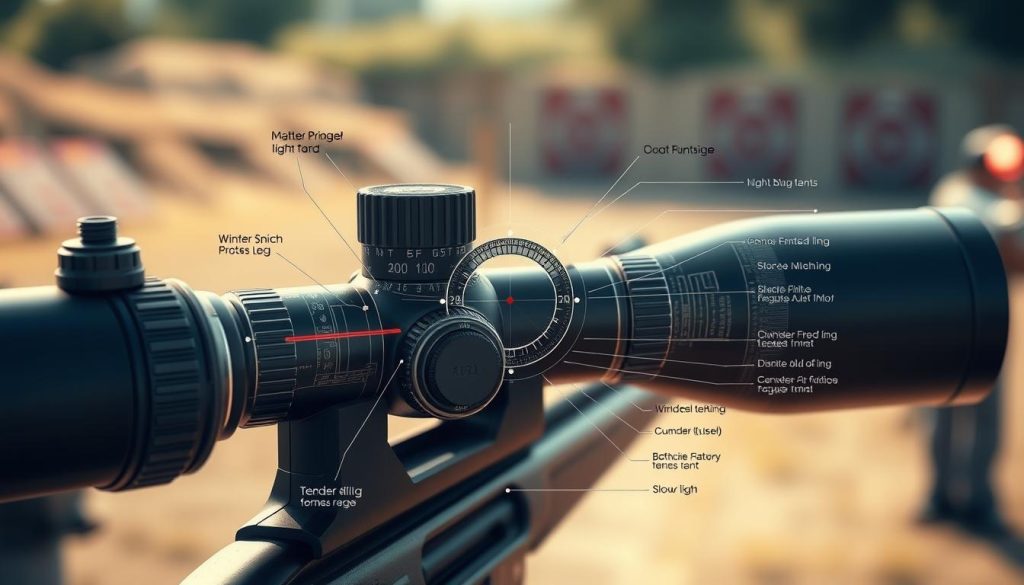
Light first hits the objective lens at the scope’s front. It then passes through several lens elements. These lenses are made to catch and focus light well.
Together, they create a sharp, bigger image for the shooter.
- Objective lens captures external light
- Internal lens system magnifies the image
- Reticle provides precise aiming points
Several important optical principles make magnified sights work. Special glass elements help reduce color distortion and improve image quality. The lenses are ground with great care to reduce distortion.
This lets shooters see far-off targets with great detail.
“Precision is the soul of a sniper scope” – Expert Marksmanship Manual
Key parts of a sniper scope include:
| Component | Function |
|---|---|
| Objective Lens | Captures initial light image |
| Erector Lens System | Inverts and magnifies image |
| Ocular Lens | Delivers final image to shooter’s eye |
Parallax adjustment is vital for accuracy. It helps adjust for small optical alignment changes. This ensures shooters can aim precisely at different distances.
Magnification Systems and Power Settings
Choosing the right magnification system is key for precision shooting with rifle scopes. Knowing the differences in magnification options helps shooters pick the best gear for their needs.
Exploring Magnification Variations
Shooters face two main magnification choices: fixed and variable power systems. Each has its own benefits for precision shooting.
- Fixed Magnification Scopes
- Simpler design
- More robust construction
- Typically lighter weight
- Variable Magnification Scopes
- Greater flexibility
- Adaptable to different shooting scenarios
- Multiple zoom levels
Focal Plane Considerations
The reticle’s placement greatly affects your shooting precision. First focal plane (FFP) and second focal plane (SFP) scopes have different performance levels.
| Focal Plane Type | Reticle Behavior | Best Used For |
|---|---|---|
| First Focal Plane | Reticle scales with magnification | Long-range precision shooting |
| Second Focal Plane | Reticle remains constant size | Close to mid-range shooting |
Understanding Zoom Ratios
Zoom ratio shows a scope’s magnification range. For example, a 3-9x scope goes from 3x to 9x. This versatility is great for various shooting distances.

“Selecting the right magnification is about matching your scope to your shooting environment and skill level.” – Professional Marksman
By considering your specific shooting needs, you can find a rifle scope with the best magnification. This will improve your performance and accuracy.
Advanced Features of Modern Rifle Scopes
Modern long-range optics have changed the game for precision shooting. They bring new tech that boosts accuracy and performance. Now, shooters get better results thanks to advanced scope adjustments.
Today’s top rifle scopes have amazing features. They make shooting better in many ways:
- Illuminated Reticles: Make targets stand out in the dark
- Zero-Stop Turrets: Help get back to zero quickly
- Custom Ballistic Turrets: Adjust for range and weather fast
Getting the scope right is key. Professional shooters know that proper mounting is crucial. It can mean the difference between hitting or missing your target. Scope adjustments need to be fine-tuned for consistent accuracy.
“The right scope transforms a good shooter into an exceptional marksman.” – Professional Firearms Instructor
Modern scopes have cool tech like:
- Digital angle compensation
- Wind drift calculation integrations
- Advanced lens coatings for better light
Choosing the right scope means knowing about these advanced features. It’s about finding the best fit for your shooting style and where you shoot.
Mastering Precision with Ballistic Reticles
In the world of precision marksmanship, knowing about ballistic reticles is key. These advanced tools turn a standard rifle scope into a precise measurement system.
Understanding Measurement Systems
Precision shooters use two main systems: Minute of Angle (MOA) and Milliradian (MRAD). Each has its own benefits for figuring out where shots will land.
| Measurement System | Precision Level | Typical Usage |
|---|---|---|
| MOA | 1 inch per 100 yards | Hunting, short to medium range |
| MRAD | 3.6 inches per 100 yards | Military, long-range shooting |
Wind Drift Compensation Techniques
Wind can greatly affect a bullet’s path. Ballistic reticles have markers for adjusting shots to counter wind drift.
- Identify wind direction and speed
- Use horizontal hashmarks for windage correction
- Practice reading environmental conditions
Elevation Adjustment Strategies
Getting good at elevation adjustments means knowing your ballistic reticle’s holdover points. These marks help with long shots by adjusting for bullet drop.
“Precision is not about perfection, but consistent, calculated adjustments” – Expert Marksman
Learning about ballistic reticles can take your marksmanship from good to great. Keep practicing and getting to know your gear well for true precision.
Conclusion
Learning about sniper scopes is more than just knowing how they work. It’s the key to becoming a top-notch marksman. We’ve seen how these devices turn into precise tools for hitting targets far away.
The world of rifle scopes is always getting better. Today’s scopes have advanced reticles and fine-tuned adjustments. This means shooters can hit their targets with more accuracy than ever before. My love for long-range shooting has shown me that mastering these scopes takes practice and patience.
If you’re into competitive shooting, hunting, or tactical work, knowing your scope well is crucial. Every time you go to the range, you get better. You become more skilled and confident with each shot.
I encourage you to keep exploring the world of precision optics. Share your stories, ask questions, and always keep learning. The journey to being great at shooting is filled with curiosity, practice, and understanding your tools.