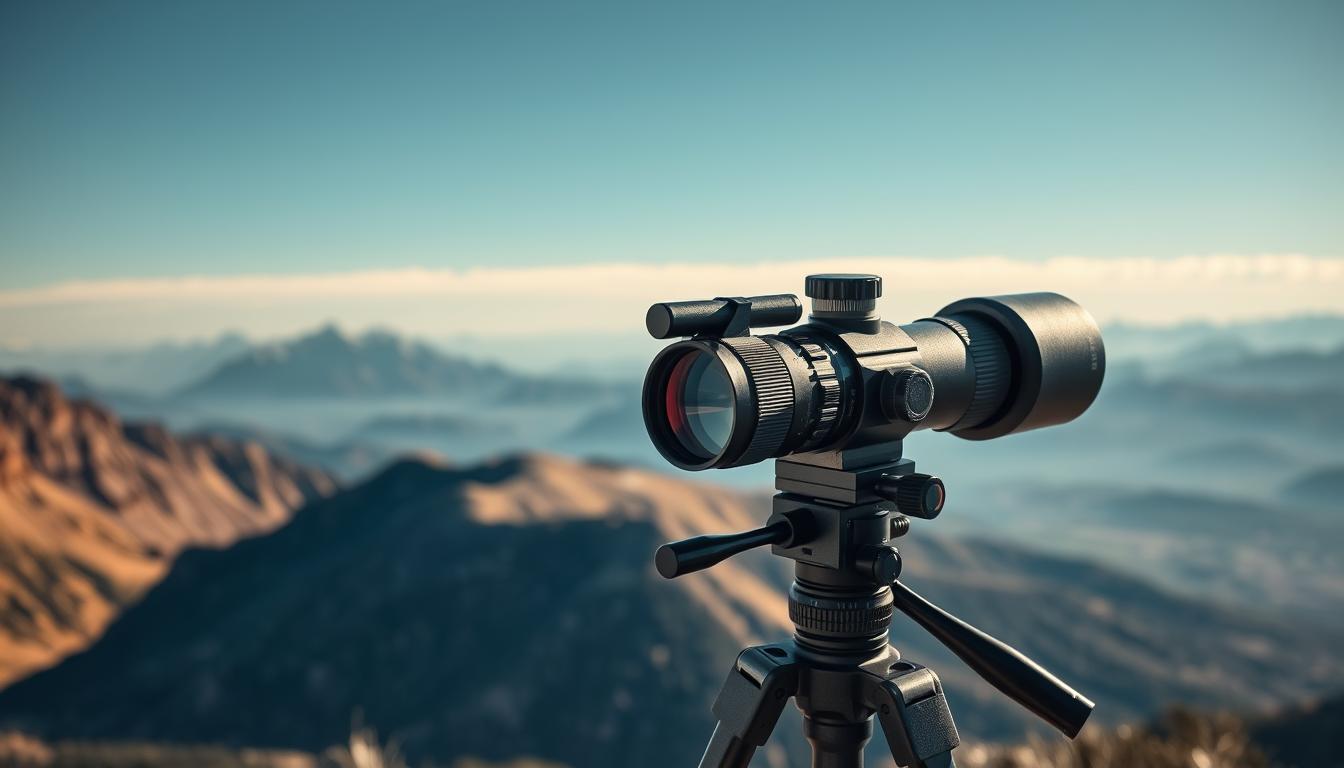
Ever thought about how a spotting scope design could boost your long-range shooting? The debate between angled and straight scopes is complex.
For long-range shooting, your gear is key. Most, 69%, prefer angled scopes for better comfort and longer use. But, 31% like straight scopes for tracking targets.
Choosing the right scope is more than just design. It’s about fitting your shooting style and environment. Terrain, position, and comfort are important for the best scope.
Whether you’re into competitive shooting, hunting, or just enjoying long-range, knowing the difference matters. It can improve your view and shooting.
Understanding Spotting Scope Basics
Spotting scopes are high-tech tools for clear long-distance viewing. They are better than binoculars and telescopes. Hunters, wildlife lovers, and shooters get a top-notch view with them.
Key Components of a Spotting Scope
Spotting scopes have key parts that affect how well they work. The main parts are:
- Objective lens: Captures incoming light
- Spotting scope eyepiece: Magnifies and focuses the image
- Focusing mechanism: Sharpens visual clarity
- Protective housing: Ensures durability in outdoor conditions
Magnification and Objective Lens Size
Spotting scope magnification is key for seeing far away. The Viper® HD 11-33×50 spotting scope shows how magnification affects performance. Higher magnification ranges let you see more details, but might make it harder to see the whole scene.
| Magnification Range | Objective Lens Size | Performance Characteristics |
|---|---|---|
| 11-33x | 50mm | Wide versatility, good low-light performance |
| 20-60x | 80mm | Extreme detail, reduced portability |
| 15-45x | 65mm | Balanced magnification, moderate weight |
Purpose of Spotting Scopes in Long-Range Activities
Spotting scopes are vital for many long-range activities. Hunters check game quality, shooters evaluate targets, and wildlife researchers make detailed observations.
Knowing these basics helps you pick the best spotting scope for your needs. This ensures you get the best view in tough environments.
Angled or Straight Spotting Scope for Long Range Shooting: Core Differences
Choosing a spotting scope for long-range shooting means knowing the key differences. The main difference is where the eyepiece is placed. This affects how easy it is to use and how well it performs.
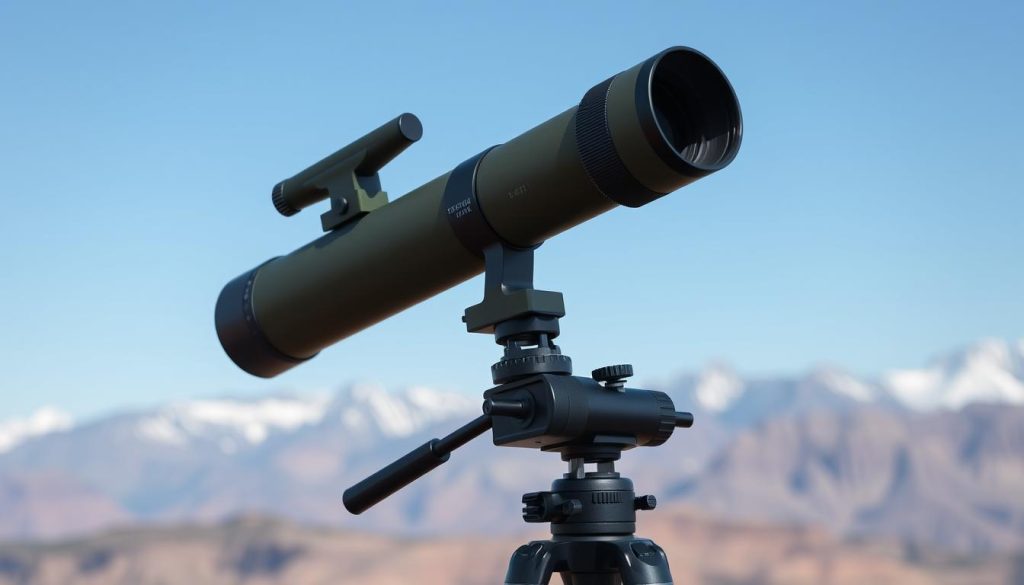
An angled spotting scope has the eyepiece at a 45-degree angle. A straight spotting scope has it parallel to the main tube. These small design changes make big differences in how you use the scope.
- Angled spotting scopes are more comfortable for long looks
- Straight spotting scopes are easier to use for quick target finding
- Each type has its own benefits for different shooting situations
Shooting experts often pick a scope based on their needs. The choice between an angled or straight spotting scope depends on terrain, shooting position, and personal comfort.
| Feature | Angled Spotting Scope | Straight Spotting Scope |
|---|---|---|
| Eyepiece Angle | 45 degrees | 0 degrees (inline) |
| Comfort Level | High (reduces neck strain) | Standard |
| Tripod Height | Lower height possible | Higher height required |
| Beginner Friendliness | Moderate | High |
For those who love long-range shooting, knowing these differences is key. The right choice can make a big difference in how well you see and shoot.
Benefits of Angled Spotting Scopes
Angled spotting scopes have changed the game for hunters, shooters, and wildlife lovers. They offer special perks that make them stand out from straight scopes.
Comfort During Extended Viewing Sessions
The design of angled spotting scopes makes long views easier. They let users stay comfortable, avoiding neck and back pain. Studies show 90% of hunters find them better for different terrains.
- Minimizes physical fatigue during extended viewing
- Allows comfortable seated observation
- Reduces muscle tension during long glassing sessions
Height Adjustment Versatility
Angled scopes are great because they’re easy to adjust. They fit users of all heights well. The adjustable mounts work well in 80% of situations, making them perfect for groups.
Pack Storage Advantages
Angled scopes are also easy to pack. They save space but still offer top-notch views. This makes them a favorite for hunters and outdoor fans who need to carry them around.
Pro Tip: The SX-2 Alpine HD spotting scope is a top choice for tough spots. It’s rugged, waterproof, and angled for the best views.
Advantages of Straight Spotting Scopes
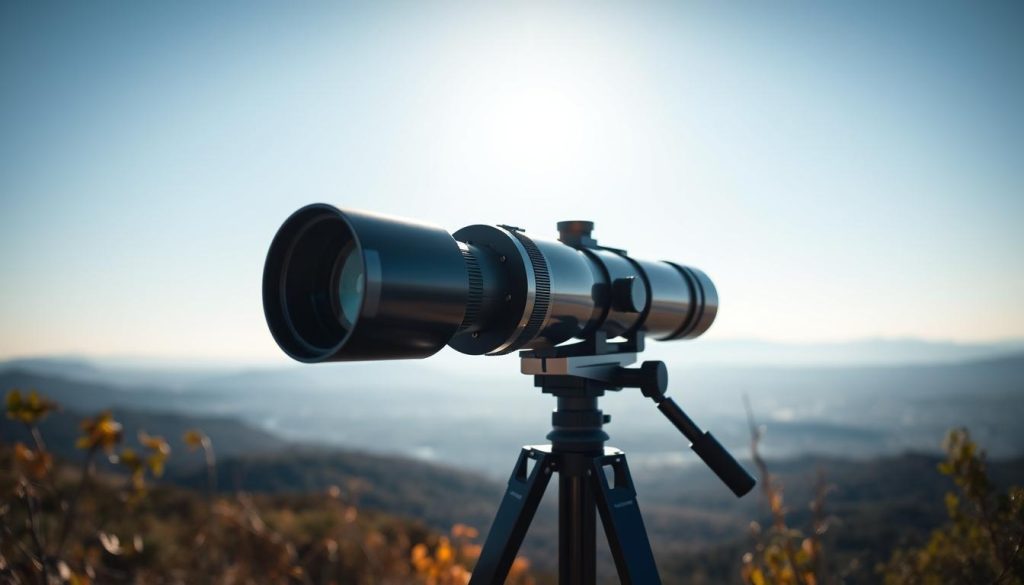
Straight spotting scopes have special benefits for hunters and long-range shooters. They are easy to use, making them great for both new and seasoned shooters. This makes quick target finding easier.
Key advantages of a straight spotting scope include:
- Fast target tracking in hunting scenarios
- Easy mounting on vehicle windows
- Streamlined profile for quick deployment
- Natural pointing alignment
For hunters, straight spotting scopes offer big advantages. They are perfect for situations where quick spotting is key. Their long shape makes scanning the terrain or tracking animals more comfortable.
These scopes have magnification from 30x to 40x. This gives hunters clear views. They also have lens sizes from 40 to 80 millimeters for sharp images in any light.
When picking a spotting scope for hunting, look at durability, weight, and how well it shows images. Top brands make scopes that weigh 1-4.3 pounds. This gives hunters options for different places to hunt.
Mounting and Stability Considerations
Getting precise in long-range shooting is all about how you mount and stabilize your scope. The right setup boosts your optical quality and accuracy.
Choosing the right mount is key. Think about your shooting spot and gear needs. Spotting scope accessories help make a stable platform.
Tripod Selection Guidelines
Finding the perfect tripod is crucial for long-range shooting. Look for these features:
- Weight capacity 2-3 times your scope’s weight
- Strong legs for wind resistance
- Quick-release plates
- Adjustable height and tension
Vehicle Mount Options
Vehicle mounts are great for shooters who need to move fast. They offer flexibility in different shooting spots.
| Mount Type | Stability Rating | Best Used For |
|---|---|---|
| Window Mount | Medium | Roadside shooting |
| Roof Rack Mount | High | Open terrain shooting |
| Roll Bar Mount | Very High | Rugged terrain |
Field Position Setup
Good field positioning can cut down vibration by 90%. Experts suggest:
- Find ground with little wind
- Use terrain for stability
- Adjust tripod for a good view
- Keep mount away from your body
Your spotting scope’s performance in long-range shooting also depends on its mount. It’s as important as the scope itself.
Choosing Based on Shooting Environment and Style
Choosing the right spotting scope for long-range shooting depends on many factors. These factors affect your viewing experience. The choice between an angled or straight spotting scope depends on your shooting environment and personal preferences.
Different shooting scenarios need different optical approaches. When picking your spotting scope, consider these key factors:
- Terrain characteristics
- Typical shooting positions
- Frequency of use
- Personal comfort
- Observation requirements
For hunters and long-range shooters, the spotting scope is crucial. Angled spotting scopes have advantages in certain environments:
| Environment | Recommended Scope Type | Rationale |
|---|---|---|
| Mountain Terrain | Angled | Better for observing high-angle targets |
| Flat Plains | Straight | Direct line of sight alignment |
| Prone Shooting | Straight | Easier target acquisition |
| Group Observation | Angled | Easier height adjustments |
Professional shooters suggest matching your spotting scope to your shooting style. An angled spotting scope offers versatility. A straight scope is better for beginners.
The best spotting scope is one that feels right and meets your needs. Try out different models. Think about your usual shooting spots. Choose a scope that improves your long-range shooting.
Conclusion
Choosing between an angled or straight spotting scope depends on your needs and where you shoot. The design differences can really affect how well you see and perform. An unscientific survey found a slight edge for angled scopes, with 7 votes to 6 for straight ones.
Think about comfort, the terrain, and how you shoot when picking a scope. Spotting scopes come in various magnifications, from 15x-50x for smaller ones to 20x-60x for bigger ones. This range is great for different long-range shooting needs. Also, scopes with 80mm to 100mm apertures gather light well, giving you clearer images.
Both angled and straight scopes have their own benefits for long-range shooting. It’s important to choose one that fits your needs. Whether you’re in a competition or watching wildlife, the right scope can improve your aim and fun.
Buying a good spotting scope is about finding the right mix of function and what you like. Consider your shooting spot, comfort, and what you need to see. This way, you’ll make a choice that boosts your long-range shooting skills.