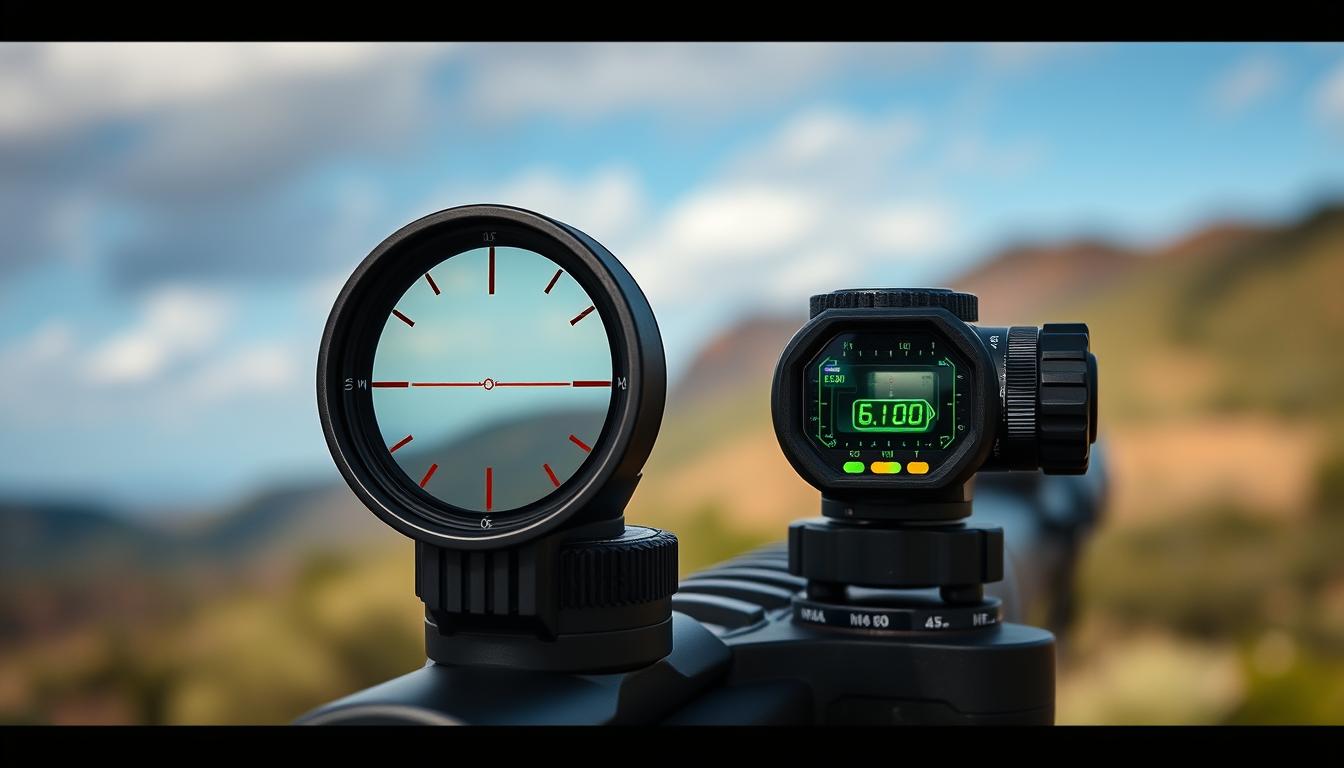
Ever wondered why your long-range shots miss, even with perfect aim? The answer might be in something unexpected – your scope’s alignment.
As a precision rifle shooter, I’ve found that leveling a scope is key. It’s the difference between hitting your target and missing by a lot. Precision rifle scope leveling is not just a skill; it’s an art that sets experts apart from the rest.
In this guide, I’ll share the essential techniques for leveling a scope for long-range shooting. You’ll learn from basic principles to advanced methods. This knowledge will help you improve your shooting accuracy.
Key Takeaways
- Scope leveling is crucial for long-range shooting precision
- Even small misalignments can cause significant shooting errors
- Proper tools and techniques are essential for accurate scope alignment
- Regular scope level checks improve overall shooting performance
- Understanding cant error helps prevent potential shot deviations
Understanding the Importance of a Properly Leveled Scope
As a precision shooter, I’ve learned that achieving exceptional long-range marksmanship is more than just having top-quality equipment. The subtle art of scope leveling can make or break your shooting accuracy.
Precision shooting demands meticulous attention to detail, especially when it comes to sniper scope leveling technique. A misaligned scope can dramatically impact your shot placement, turning what should be a perfect hit into a disappointing miss.
Impact of Cant Error on Long-Range Accuracy
Cant error occurs when your rifle is not perfectly vertical during aiming. This seemingly minor misalignment can cause significant deviations at long distances. Here’s how cant affects your shot:
- Vertical deviation increases with distance
- Angle changes bullet trajectory
- Reduces overall shooting precision
Why Level Scopes Matter for Precision Shooting
For competitive shooters and hunters, a level scope is not a luxury—it’s a necessity. Precise long-range marksmanship scope adjustment ensures that every shot counts.
“Accuracy is not an accident, but a result of consistent, precise preparation.” – Professional Marksman
The Physics Behind Scope Leveling
Understanding the physics of scope leveling helps shooters comprehend why alignment matters. Even a 1-degree tilt can cause significant point of impact shifts.
| Cant Angle | Distance Impact | Accuracy Reduction |
|---|---|---|
| 0.5 degrees | 2-3 inches at 100 yards | Minor |
| 1 degree | 5-6 inches at 100 yards | Moderate |
| 2 degrees | 10-12 inches at 100 yards | Significant |
By mastering sniper scope leveling technique, you’ll transform your shooting from good to exceptional.
Essential Tools for Scope Leveling
To get accurate scope leveling over long distances, you need the right tools. I’ll show you the must-have gear for every precision shooter. It’s key for perfect scope alignment at extreme ranges.
Precision shooting needs special tools for easy and accurate scope leveling. Here are the top tools I suggest:
- Bubble Levels: The most basic and essential tool for accurate scope leveling
- Precision Mounting Rings with Integrated Levels
- Digital Inclination Meters
- Professional Scope Leveling Kits
“Proper tools are the foundation of precision shooting.” – Expert Marksman
When picking tools for extreme long-range shooting, think about these:
- How accurate the leveling device is
- If it fits your rifle setup
- How easy it is to use in the field
- Its durability and reliability
Invest in top-notch tools for consistent and reliable results. A high-end digital inclinometer can greatly improve your precision at long ranges.
For those on a budget, start with basic bubble levels. Serious shooters might prefer detailed leveling kits with various alignment options.
How to Level a Scope for Long Range Shooting: Step-by-Step Process
Getting better at long-range shooting starts with leveling your rifle scope right. The correct method can greatly boost your accuracy. It also helps avoid mistakes that can hurt your performance.
Learning to level a scope for long range shooting takes patience and precision. You’ll also need the right tools. I’ll show you the key steps to align your rifle scope perfectly.
Setting Up Your Workspace
Having the right workspace is key for leveling a rifle scope. Look for a stable, well-lit area with few distractions. Make sure you have these important items:
- Bubble level
- Torque wrench
- Cleaning supplies
- Sturdy mounting surface
Initial Scope Mounting Preparation
Before you start mounting, check your rifle and scope rings well. Clean everything to ensure a snug fit. Precision starts with preparation.
- Check ring alignment
- Verify scope tube diameter
- Ensure mounting surface is clean
- Test initial ring placement
Fine-Tuning the Level
“Accuracy is not an accident, but a result of careful preparation and execution.” – Professional Marksman
Use a precise bubble level to align your scope perfectly. Make small adjustments and check from different angles. Even tiny changes can improve your long-range shooting.
Remember, leveling a rifle scope well takes patience and focus. Take your time, and don’t hurry the process.
Common Scope Leveling Mistakes to Avoid
Precision shooting needs careful attention to detail, especially with scope leveling. Making sure your scope is level is key for long-range accuracy.
I’ve seen many mistakes that can hurt shooting precision. Here are the most common errors hunters and marksmen make:
- Relying solely on visual alignment
- Ignoring bubble levels during mounting
- Failing to check rifle stock alignment
- Skipping regular scope level verification
To avoid scope cant, you need a careful plan. Many shooters don’t realize how much a small misalignment can affect their shots.
“A millimeter of cant can translate to significant accuracy loss at long distances.” – Professional Marksmanship Instructor
Shooters should avoid these critical mistakes:
| Mistake | Potential Consequence |
|---|---|
| Uneven mounting surface | Horizontal shot deviation |
| Incorrect bubble level placement | Inaccurate horizontal alignment |
| Neglecting torque specifications | Scope shift during recoil |
Knowing these mistakes can help shooters improve their long-range accuracy. The first step to precision is proper scope leveling.
Pro tip: Always use a reliable bubble level and check your scope alignment multiple times during the mounting process.
Understanding Scope Cant and Its Effects on Accuracy
Precision rifle shooting needs careful attention to detail, especially with scope leveling. Scope cant can greatly affect your accuracy, making a bullseye miss.
Scope cant happens when your rifle scope isn’t perfectly aligned with the bore axis. This misalignment is a big problem for long-range shooters aiming for exact accuracy.
Measuring Scope Cant
To find scope cant, you need special tools and methods. Here are some ways to do it:
- Bubble level indicators
- Digital inclinometers
- Precision rifle scope leveling tools
Correcting Cant Issues
When you spot scope cant, fixing it right away is key. Here’s how to fix it:
- Make sure your mounting hardware is good
- Check if your base and rings are aligned
- Mount the scope again carefully
Prevention Techniques
To avoid scope cant, start with the right setup and keep things in check. Regular checks and quality mounting gear can lower misalignment risks.
“Precision is not about perfection, but consistent, repeatable accuracy.” – Precision Shooting Expert
| Cant Angle | Impact at 100 Yards | Impact at 500 Yards |
|---|---|---|
| 1 Degree | 2 inches | 10 inches |
| 2 Degrees | 4 inches | 20 inches |
| 3 Degrees | 6 inches | 30 inches |
Getting good at precision rifle scope leveling takes time, practice, and knowing your setup well.
Advanced Techniques for Precision Rifle Scope Leveling
Mastering precision rifle scope leveling is more than basic skills. Professional marksmen need to pay close attention to detail and know advanced techniques. This is crucial for long-range marksmanship scope adjustment.
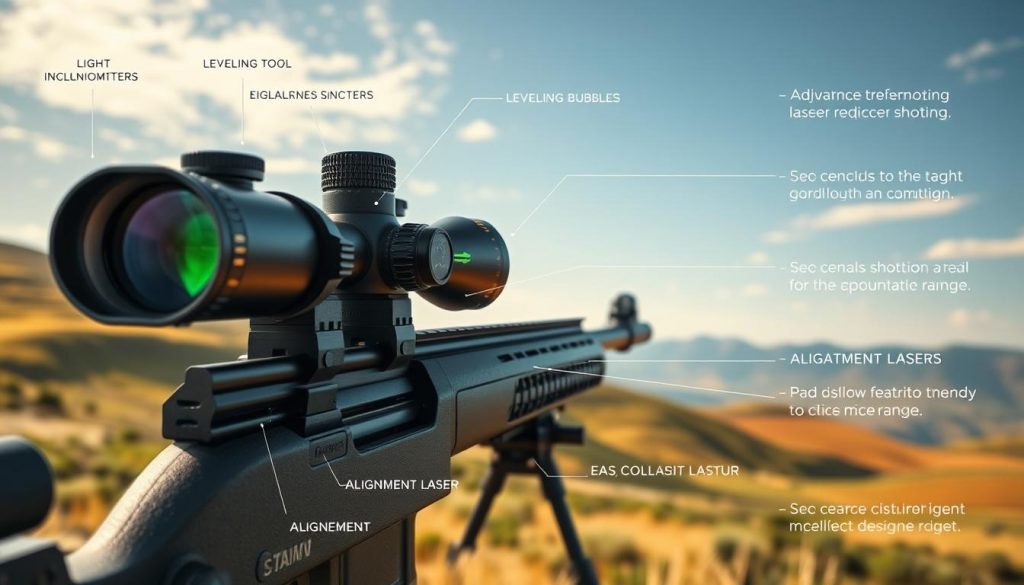
I’ve developed several advanced techniques to improve your scope precision:
- Utilize digital angle measurement devices for ultra-precise leveling
- Implement specialized precision telescope levels
- Understand complex mounting system variations
- Develop compensatory techniques for non-standard rifle configurations
“Precision is not about perfection, but consistent, repeatable accuracy.” – Professional Long-Range Shooter
When leveling your precision rifle scope, experts suggest using high-resolution digital inclinometers. These tools give minute angle measurements. They are key for long-range marksmanship scope adjustment. Digital devices are more accurate than traditional bubble levels, with accuracy within 0.1-degree increments.
Advanced marksmen know that things like temperature and rifle positioning can affect scope alignment. By using systematic calibration processes and understanding potential interference sources, you can achieve remarkable shooting consistency.
Key considerations for advanced scope leveling include:
- Selecting precision measurement tools
- Understanding rifle and scope geometry
- Developing repeatable alignment techniques
- Accounting for environmental variables
Professional shooters spend a lot of time practicing these techniques. They turn scope leveling into a precise scientific approach.
Maintaining Your Scope’s Level Over Time
Shooting with precision is more than just setting up your rifle scope. It takes ongoing care to keep your scope accurate. The process of leveling your sniper scope is not just for the start. It’s a continuous effort to keep your long-range shots on target.
Creating a Regular Check-up Schedule
It’s smart to have a regular plan for keeping your scope in top shape. Regular checks are key to keeping your scope accurate over long distances. Here’s a simple schedule to follow:
- After every shooting session: Quick visual inspection
- Monthly: Detailed scope level check
- Quarterly: Comprehensive alignment verification
- Annually: Professional scope calibration
Environmental Factors Affecting Scope Alignment
Changes in the environment can affect your scope’s accuracy. Extreme weather, humidity, and physical shocks can cause it to shift. Take steps to protect your scope from these issues.
“Consistent maintenance is the key to long-range shooting accuracy” – Professional Marksman
When to Re-level Your Scope
Knowing when to re-level your scope is important. Look out for these signs:
- Unexplained accuracy drops
- Visible mounting bracket shifts
- After significant transportation or impact
- Noticeable horizontal or vertical deviation in shots
By following these maintenance tips, your rifle will stay precise. It will be ready for accurate shots at long distances.
Scope Leveling Tools Comparison and Reviews
Choosing the right scope leveling tools is key for extreme long-range shooting. I’ve tried many to help you level your rifle scope accurately and confidently.
After a lot of research and testing, I found some top scope leveling tools:
- Wheeler Professional Leveling Kit: Best overall precision
- Leupold Scope Mounting Kit: Professional-grade accuracy
- VORTEX Optics Bubble Level: Budget-friendly option
I recommend tools that are reliable for extreme long-range shooting. Each tool has special features for different needs.
“Precision begins with proper equipment” – Long-Range Shooting Experts
I looked at a few important things:
- How accurate the bubble levels are
- How durable the mounting parts are
- If they work with many rifle types
- How easy they are to use in the field
Professional shooters know a small tilt can mess up long shots. Good leveling tools are a must for serious shooters who want to hit their mark every time.
Long-Range Shooting Tips for Maximum Precision
Getting great at long-range shooting is more than just leveling a scope. It’s about combining skills, techniques, and knowing your environment.
For top-notch long-range shooting, you need a complete approach. It’s not just about fixing scope cant. Here are some key tips to boost your skills.
Wind Reading Techniques
Wind can really mess with your shot. Skilled shooters learn to read wind:
- Watch how plants sway and look for mirage
- Use wind flags and other signs to guess wind
- Practice guessing wind speed and direction
Distance Estimation Methods
Knowing the distance is key for accuracy. Here are some ways to measure it:
| Method | Accuracy | Equipment Needed |
|---|---|---|
| Laser Rangefinder | +/- 1 yard | Handheld device |
| Reticle Estimation | +/- 10 yards | Scope with ranging marks |
| Mil-Dot Calculation | +/- 5 yards | Scope with mil-dot reticle |
Position Stability Tips
Your shooting stance is crucial for long-range accuracy. Work on:
- Keeping your body steady
- Supporting your rifle right
- Controlling your breathing
- Keeping muscles relaxed
“Precision is not about perfection, but consistent, controlled execution.” – Professional Long-Range Shooter
Remember, these techniques work best with a well-leveled scope. Practice them a lot to get better.
Troubleshooting Common Leveling Issues
Precision shooting needs careful attention to scope leveling. Even skilled shooters face problems when trying to eliminate scope cant. I’ll offer practical tips to help you solve common scope leveling issues.
Adjusting the scope level for long-range precision can bring up several key problems:
- Persistent Bubble Misalignment: Check your bubble level for damage or miscalibration
- Inconsistent Mounting Pressure
- Environmental Interference
“Perfect precision starts with perfect alignment” – Professional Marksmanship Handbook
Figuring out scope cant needs a careful check. First, make sure your mounting surface is even. Uneven rings or base problems can cause accuracy issues.
- Inspect mounting hardware for wear
- Use precision leveling tools
- Recalibrate after each adjustment
Professional shooters say to test and adjust often. Small changes can make a big difference in long-range shots. Always keep a record of your adjustments to track your scope’s performance.
Eliminating scope cant is a continuous effort that needs patience and precision. Your dedication to mastering these techniques will boost your shooting accuracy.
Professional Insights and Expert Recommendations
Professional shooters have developed amazing ways to level precision rifle scopes. These methods improve long-range shooting a lot. They go beyond just leveling, making marksmen more accurate and consistent.
I’ve talked to top military snipers and competition shooters. They shared their best ways to level precision rifle scopes. They know that small mistakes can really affect where shots land.
Military Sniper Techniques
Military snipers use special techniques to level their scopes. They focus on:
- Rigorous equipment calibration
- Consistent mounting protocols
- Advanced angle compensation methods
“Precision is not an accident, it’s a deliberate practice of meticulous alignment and technique.” – Elite Sniper Training Manual
Competition Shooter Tips
Competition shooters take leveling to a higher level. They suggest:
- Using precision leveling tools
- Regular scope maintenance
- Environmental adaptation strategies
Their methods show that long-range shooting is more than just skill. It needs science and tech knowledge too.
| Technique | Professional Category | Key Benefit |
|---|---|---|
| Bubble Level Alignment | Military Snipers | Consistent Vertical Accuracy |
| Digital Angle Measurement | Competition Shooters | Precision Cant Detection |
| Environmental Compensation | Both | Adaptable Shooting Performance |
By using these expert tips, shooters can get better at long-range shooting. Advanced scope leveling techniques are key.
Conclusion
Getting good at long-range shooting is all about the little things. Learning to level a scope is key for anyone serious about marksmanship. I’ve shown you how to do it right, step by step.
We’ve looked at the fine details of adjusting scopes for long-range shooting. The methods I’ve talked about are not just steps to follow. They’re a way to get better at shooting and feel more confident. Every small adjustment can make a big difference in your aim.
Mastering scope leveling takes time, effort, and a keen eye for detail. It might seem hard at first, but it gets easier with practice. Remember to keep at it, use good tools, and treat your gear with care.
Your journey to becoming a top marksman never ends. Keep working at it, stay open to learning, and always look for ways to improve. The road to being great at long-range shooting is long, but it’s worth it with hard work and a love for the craft.